Wednesday, September 9, 2015

Sunday will never be the same

Well, a new NFL season begins Thursday night with a game between the New England Patriots and the representatives of my city, the Pittsburgh Steelers.

And I don’t care.

That’s right. Maybe I’ll have it on if the Pirates aren’t playing that night or if I’m not working my way through season five of “Breaking Bad,” but, unlike in past years, I won’t be waving my Terrible Towel or throwing a foam brick at the TV screen as the referees blow another call. I won’t be playing a song on YouTube that lists a bunch of Steelers who retired when I was in high school. 

The reason is simple—they signed Michael Vick.

Jamie and I have not taken this decision lightly. She has bled black and gold her whole life, and I have done so since I moved here in 2002. Following the Steelers has been a big part of our lives every fall. 

By signing Vick, the Steelers are paying millions of dollars, and, in a way, giving approval to a dog killer. We all heard the scandal when it first happened. We know about Bad Newz Kennels and Vick’s plea bargain to racketeering charges. Since he signed with the Steelers, I’ve heard many people talk about how he’s done his time. He showed promise in the preseason, so people are acting as if he’d been caught with a bag of weed. 

I think some people need to have their memories refreshed. Here is the official USDA report on Bad Newz Kennels, which shows that not only was Vick involved with the operation, but actually killed quite a few dogs. And all this to win bets that were a fraction of what he was making as an NFL player. It was clearly not the money that motivated him. He would not have been involved in dogfighting if he didn’t enjoy it. This is not someone who has been rehabilitated by a short prison sentence. 

The decision to sign Vick represents an all-time low for an organization that I had come to admire for its moral high ground. The Steelers, in the past, seemed to shun controversy and not take any crap. Remember that, just a few years ago, they traded away a Super Bowl MVP because he liked to "wake n bake."

Now this looks less like a moral high ground than a symptom of a generally twisted NFL culture. Kill people, rape women, smash dogs against the ground, it’s all OK—just as long as you’re not stoned while you do it. Perhaps the real problem is not with the Steelers, but with a league where anything goes and a sport that’s violent to begin with, and getting worse. 

I’m not sure what I’ll do once Vick is off the team, but for now, it’s hockey season once the Pirates are done. 

Friday, May 4, 2012

For my old Kentucky home, far away

Here I am on the eve of another Kentucky Derby.

There is anticipation and angst. There is the knowledge that tradition will be renewed and history will be made tomorrow. There is the thrill of the "Greatest Two Minutes in Sports" and a little voice in me wondering why I care so much anymore.

This race is, in a large way, the story of my family, even though none of us are from Kentucky and only an aunt of mine lives there. But my brothers and I know the legends of the race--who won in 1973, who lost in 1953, who didn't start in 1920. Each of us remember where we were for the Derbys of our lifetimes and who we bet on.

The first Derby I remember seeing on TV was the 1972 Derby, won by Riva Ridge (although I recall seeing the Racing Form for the Derby the year before). Then Secretariat won the Triple Crown and I was hooked.

Racing was a big part of my life when I was growing up. I learned as much as I could about the sport and its history, and it was often talked about in my house. My family thoroughly analyzed the lead-up and aftermath of every major race (as well as the fifth at Beulah Park), and I assumed that every other household did the same.

It came as a bit of culture shock when I went to college and found that I was the only person there who knew or cared about racing. (What--you mean everybody doesn't know what a trifecta is?) My college did have an equine science program, but it didn't seem to have much to do with racing. It was frustrating trying to watch major races on TV and try to be engaged in an interview with a jockey in an upcoming race while loud conversations took place in the room, most of which centered around the inability to get laid.

It was at that time, though, that I went to the Derby in person three times. I will never forget my first look at Churchill Downs' Twin Spires as I approached it from the clubhouse parking lot. Television does not do justice to the size of the grandstand, which emerges as you approach it--horse racing's greatest monument. Even though I didn't see a horse all day, there was nothing like the experience of being part of racing history.

I had the opportunity to work for Daily Racing Form for several years, and it was a grand ride. Canterbury Park, Hoosier Park, Delta Downs...it was full of exciting racing and some great memories.

Economic realities set in, and my job at the Racing Form is long gone. Tomorrow is one of two days of the year (the other being the Breeders' Cup) that I visit the OTB each year. But racing will never leave me.

I will know where each member of my family will be at 6 p.m. tomorrow. We will all be somewhere--an OTB, a race book, or in front of a TV--hearing the University of Louisville Marching Band play "My Old Kentucky Home" and renewing one of the grandest traditions in sports.

In the words of horse racing commentator Harvey Pack, may the horse be with you.
 

Monday, April 16, 2012

We've got to get right back to where we started from

It's been a while since I last posted to The Fritz Blitz. Another winter has come and gone, and it seems as if the Pittsburgh Penguins' season is about to end as well.

As I write this, the Penguins are down 3-0 to the hated Philadelphia Flyers in the first round of the Stanley Cup playoffs. The Pens ended their regular season with their strongest play in quite some time, punctuated by the return of the best active player in the NHL, Sidney Crosby.

After going up 3-0 in the first period of the first playoff game, the Penguins' play has been embarrassing. The series has been marked by bad turnovers, a Swiss-cheese defense, a nonexistent power play and a general lack of discipline.

In the penultimate regular season matchup between these bitter rivals, there was an altercation between Flyers head coach Peter Laviolette and Pens assistant coach Tony Granato in which Laviolette accused the Pens of sending goons in toward the end of the game. It was a ridiculous charge because the fourth-line players on the ice at that time were all legitimate scoring threats.

It appeared in Sunday's third game that the Penguins were trying to prove Laviolette right.

There was Aaron Asham's cross-check and punch of Brayden Schenn in the first period, resulting in a game misconduct. There was Craig Adams' penalty and automatic suspension for instigating a fight in the final five minutes of the game. And there was the general atmosphere of a game that resembled a scene from Slap Shot.

The pundits, never big fans of the Penguins, seem to have abandoned them. This morning's recap on the NHL Network emphasized a fight between Crosby and the Flyers' Claude Giroux, coupled with an absurd quote from Laviolette, who thinks that two of the best players in hockey beating each other's heads in is somehow good for the game. The Flyers, long known as the NHL's bad boys, are coming off as the good guys to everybody outside Western Pennsylvania.

Wednesday night is the Penguins' last stand. It's hard to come back from an 0-3 deficit, but it has been done before. The Pens can do this, but it will take the best hockey they've played all season. If not, I can forget about La Coupe Stanley and go back to handicapping the Kentucky Derby.

Sunday, November 13, 2011

College football--a tarnished institution

I’m reviving The Fritz Blitz this week. I had planned on reviving my general news blog, Fritzburgh An’at, but the most important story of the past week is also a sports story.

So much has been said about the child sexual abuse scandal* at Penn State that it seems that there’s nothing new to add—at least until more victims come forward. Pedophiles aren’t known for stopping in the single digits.

The scandal is not just sports news—it’s world news. Everybody seems to have an opinion on it—even people who could care less about football.

The reactions will be predictable. Colleges will tighten their regulations about reporting sexual abuse, as they should. But the scandal has everybody asking—how did this happen? How was Jerry Sandusky able to rape children for years while losing nothing but the keys to a locker room?

Sometimes it’s hard to remember, with all the prestige that comes with their positions, that college football coaches are, or are supposed to be, teachers. They are considered professors in their respective physical education departments, and many of them teach classes.

Suppose a professor of English or biology—or even a coach of a less popular sport than football—had been caught raping a child in a classroom at Penn State. Would it have gone unreported to the police for nine years? I doubt it.

What makes the difference? The stakes are much higher in the world of college football than they are elsewhere on campus.

At the elite schools, college football is a multi-million dollar industry and the people involved in it have an enormous amount to lose if things go wrong. Many head coaches make seven-figure salaries and rank among the most powerful people on campus. When Penn State is mentioned, many people—before the scandal, and, no doubt, for many years to come—will think of Joe Paterno. And as such, the Penn State scandal has given a black eye to the university as a whole, even though only a small percentage of its students are directly connected to the football program. To many people, Penn State has become “that college where…” For comparison, when I was growing up in Ohio in the ‘70s, “that college where…” was Kent State.

So you have a powerful organization whose goal is to win on and off the field—where a few individuals are revered and even considered infallible as long as they keep winning—and where nobody wants to rock the boat, lest they lose their jobs or kill the cash cow. It adds up to the perfect place for someone to commit one of the most heinous crimes and fly under the radar for years.

I wonder what other scandals are going on at other big-name football programs. We know about the recruiting violations, unscrupulous boosters, and players who trade their jerseys for tattoos that come to light from time to time—but those are mere violations of NCAA rules, not disgusting crimes that shock the conscience.

How many other Jerry Sanduskys are out there hiding behind the power and prestige of an elite college football program because nobody wants to speak out and tarnish the program’s reputation?

Maybe it’s time that college football took a good look at itself. Has it become too big and too dependent on winning and making money for its own good?

*And please, let's stop calling this a "sex scandal." Bill Clinton was a sex scandal. Herman Cain is a sex scandal. What happened at Penn State was the rape of children--one of the most horrible crimes imaginable.

Sunday, March 20, 2011

Playing with Passion

(Published in Western Pennsylvania Mensa Phoenix, April 2011)

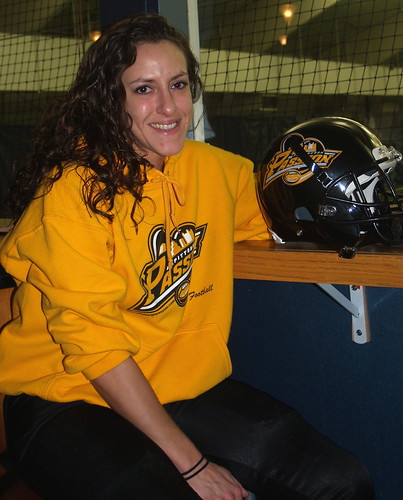
You know about one champion professional football team in Pittsburgh, but you might not know that there’s another one—which has a Mensan in its ranks. Michele George plays linebacker for the Pittsburgh Passion, a women’s football team that has played since 2003.

03082011_22

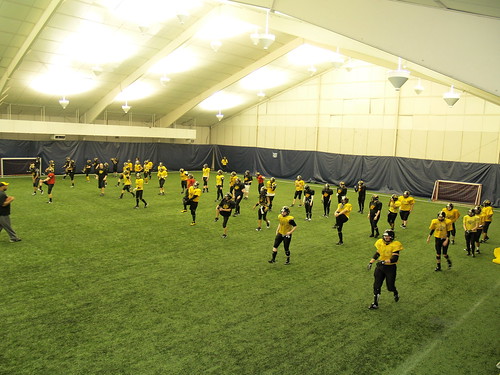
The Passion, who won their league championship while going undefeated in 2007, will play in the Women’s Football Alliance as they begin their season this month. They play their home games in George K. Cupples Stadium on the South Side and practice at The Club Sport and Health in Monroeville. Owned by Head Coach Teresa Conn and Pittsburgh Steelers Hall of Famer Franco Harris, the Passion has been in the forefront of women’s football throughout their existence. In addition to their national title and two divisional championships, the Passion have set league attendance records and become the first women’s football team to broadcast games on a major television network (Fox Sports Net).

Michele, a native of East Brady, tried out for the team last year even though she had not played any sports in almost 10 years. She had lettered in volleyball and track at Butler High School and competed in the long jump, triple jump and pole vault at Clarion University. “I knew zero about football,” she said. “Never paid attention to it, never played the game.”

“When I moved to Pittsburgh, I wanted to do all the things I always wanted to and couldn’t,” she said. “I just wanted to try out to see if it was something I could do.”

The financial analyst at PNC Bank could say the same for joining Mensa. While she initially took the test to add to her resume, she has found other benefits to her Mensa membership. She said that going to Mensa activities such as Lemongrowers in different parts of the Pittsburgh area has forced her to learn the city.

03082011_21

Michele started out as a wide receiver with the Passion. “I thought I was doing good at that,” she said, “but at wide receiver, you’re pretty defenseless as far as taking hits.” After sustaining a concussion in practice, she decided to try a new position. “I asked the coaches, ‘Where’s a good place not to get blindsided?’” she said.

In an intra-squad flag football league, she found out she was good at defense, so the coaches suggested she try linebacker. “I really liked it,” she said. “Your head’s up the whole time. You can see who’s coming at you.”

Michele has found that football has some things in common with activities that some might associate more with Mensans. “Football is like chess,” she said. “You run the offense where you think the defense is not going, and on defense, you think, ‘This piece is in this position.’”

The Passion’s roster includes players from all over western Pennsylvania, and even a player from the Cleveland area, even though there is a Cleveland team in the league. They will play eight games during the regular season, with the first three on the road. The opening game will be against Pittsburgh’s other women’s football team, the Force, at the Ambridge High School stadium Apr. 2 at 7 p.m. The Passion will host the Columbus Comets in their home opener Apr. 30 at 7 p.m.

03082011_29

The Passion will be looking to improve on last year’s 4-4 record, and Michele thinks the team’s extensive preparation should give them an edge.

“The coaches said we’ve been together longer than any of the other teams in the division,” she said. “We know what we need to do and when we’re going to do it. I just don’t know what our opponents are going to do.”

2011 PITTSBURGH PASSION REGULAR SEASON SCHEDULE

April 2, Pittsburgh Force, Away
April 9, Erie Illusion, Away
April 16, Cleveland Fusion, Away
April 30, Columbus Comets, Home
May 14, Pittsburgh Force, Home
May 21, Columbus Comets, Away
June 11, Cleveland Fusion, Home
June 18, Erie Illusion, Home
All games at 7 p.m.
2011 Pittsburgh Passion Home Game Ticket Sales
Individual Tickets:
Adult: $14.00
Senior / Military: $10.00
Children (5-17): $7.00
Students with ID: $7.00
Season Passes
Adult: $46.00
Senior / Military: $32.00
Children (5-17): $22.00
Students with ID: $22.00
Tickets are available at www.pittsburghpassion.com. Individual game tickets are also available for purchase on home game days at the gate.

Saturday, February 5, 2011

I think you're gonna finally understand

The problem with a blog like The Fritz Blitz is that there is just so much sports news out there that is available from much better sources. By the time Jamie and I get wind of something we’d like to write about, hundreds of people have beaten us to it, and they have access to much greater information on the topic than we do. By the time we gain insight on Troy Polamalu’s Achilles tendon or Ben Roethlisberger’s choice in karaoke songs, those stories have been across cyberspace and back again.

That’s why we often need to go beyond statistics or the results of any one game and get into what sports mean to us. So while other sports outlets are dissecting the many matchups in Super Bowl XLV—Roethlisberger vs. Aaron Rodgers, Polamalu vs. Clay Matthews, The Black Eyed Peas vs. music—I’m going to make this Super Bowl column more personal.

This is about how I became a Pittsburgh Steelers fan.

When I was young, I was interested in the NFL in general, but I never had an allegiance to any one team. (The first pro football game I remember seeing on TV was an AFL game! Yeah, I’m old.) I think this was because I grew up in the middle of Buckeye country—where the most professional football team wears scarlet and gray. I remember wearing a Kansas City Chiefs windbreaker when I was a kid—not because I really cared about the Chiefs, but because I liked the colors.

NFL fandom in Columbus is split between the Browns and the Bengals, with a considerable number of Steelers fans. I went to a Bengals game with my brother when I was in college, and I thought it was cool that they made a couple of Super Bowls, but watching the NFL was mainly something I did when I had nothing else to do on Sunday.

This changed when I met Jamie.

When I visited her house before I moved to Pittsburgh, one of the things we did was watch the Steelers. We turned the TV volume down and listened to Myron Cope on the radio. I knew right then that I was watching much more than a football game. From Cope’s expressions like “yoi” and “um-hah” to the many years of lore behind the team, it was easy to be caught up in the Steelers phenomenon.

It’s no accident that I remember the day I moved to Pittsburgh—Nov. 10, 2002—as the day that the Steelers tied the Falcons, 34-34. Jamie and I saw our first game in person the next year. Not only was the game against the Chargers meaningless to the playoffs, the weather was quite cold (although Wikipedia says it was 38 degrees)—but you wouldn’t have known that judging from the crowd.

A Steelers game is something to see. It appears as if the whole town turns out for it—all devoted to their team and cheering on their favorites. And when there’s something important on the line—as there was in the 2005 playoff game we saw against the Jets—the upper deck of Heinz Field shakes. I have never seen such devotion to a team anywhere (and, yes, that includes the Buckeyes).

It has been fun watching the team build over the years, as each year brought with it new prospects that have become the team that’s playing in the Super Bowl now. There will be more than a team playing in the game tomorrow—there will be an entire city, and a great, big Steeler Nation, playing for a seventh Super Bowl ring.

GO STEELERS!

Saturday, January 15, 2011

Sportspocalypse!

Today's a big day for sports in Pittsburgh. The Penguins play the Bruins at 1 PM. The Steelers battle the Hated Ravens at 4:30. And apparently, there's also a Pitt basketball game tonight. I only know because several people have mentioned offers of free tickets, which they declined. Poor Pitt. Don't worry. By the time March Madness rolls around, you'll only have to compete with the Penguins.

I haven't blogged here in a while because I am lazy, and I haven't had much to say. But I didn't feel it was right to let this momentous occasion pass without leaving a little positive mojo out there for my Steelers. I hope the game goes just like this one did.


Go Pens, Go Steelers, Go Pittsburgh!

Thursday, November 25, 2010

Not so little sisters

The scenario is a common one. A college football team gains some respectability, but has not quite broken into the sport’s top echelon. They go through their season undefeated, although critics maintain that their schedule is weak. Despite their record, they are not invited to the championship game.

Sound like Boise State? TCU? Try Colgate in 1932.

Not only did the Red Raiders go undefeated that year, they did not allow a point—which no Division I team has done since 1939, and would be inconceivable in today’s college football world. Nevertheless, they were not invited to the Rose Bowl (the de facto college championship at that time), which instead chose twice-tied Pitt, which was blown out by USC.

To use one of writing’s worst (if often appropriate) clichés, the more things change, the more they stay the same.

For all the talk about the BCS system, it hasn’t changed anything. Every year, questions and controversy surround the champion.

Now comes E. Gordon Gee, president of The Ohio State University, and his remark that teams such as Boise State and TCU don’t deserve to play in the BCS Championship Game, implying that they play “Little Sisters of the Poor.”

While Boise State and TCU play in conferences that are, generally, a step below the Big Ten/11/12 or whatever you want to call it now or the SEC, I would be hard-pressed to call any of their opponents “Little Sisters of the Poor.” One reason for their weaker schedules is that the big boys don’t want to play these schools.

Why? Ask Virginia Tech, beaten by Boise State earlier this year at FedEx Field—neutral, but much closer to Blacksburg than to the Broncos’ blue (do not adjust your set) turf.

Ask Oklahoma, beaten by Boise State in the 2007 Fiesta Bowl.

And, while I am an OSU fan who will be cheering them on as they destroy Michigan Saturday, let’s talk about the Buckeyes’ “Little Sisters” for a minute.

The scheduling of non-conference mid-majors early in the season amounts to an Ohio State tradition. Note that the following teams have been on the Buckeyes’ recent past and future schedules:

2008: Youngstown State, Ohio U., and Troy.
2009: New Mexico State
2010: Marshall, Ohio U., Eastern Michigan
2011: Akron, Toledo
2012: Miami (Ohio), Alabama-Birmingham

None of these schools are literally “Little Sisters of the Poor,” but they are mid-major programs similar to those played by Boise State and TCU. The Buckeyes have the additional advantage of playing all of them in Ohio Stadium (except Toledo, which will be played in Cleveland). Not sure why, but I imagine it has to do with logistics—the opponents’ stadiums would have trouble handling the size of a crowd that the Buckeyes would attract.

Gee is certainly smart enough to know who’s paying him to make statements such as this—but “Little Sisters of the Poor”? Even a Buckeye fan like me has to give him 15 yards for piling on.

Sunday, November 7, 2010

Horse of the Year? It's no contest

So now the controversy begins.

As far as the Eclipse Award voters are concerned, the result of Saturday’s Breeders’ Cup Classic could not have been worse.

First there is Zenyatta, who has not won Horse of the Year despite going 19-for-20. She did almost everything asked of her throughout her career, although there were disputes in the racing community as to just how good she was. Many said she faced soft fields of fillies and mares that were far inferior, and that her greatest triumph—the 2009 Breeders’ Cup Classic—came on a synthetic surface.

Then there’s Blame, who Daily Racing Form is already describing as “the probable Horse of the Year” based on his head victory in yesterday’s race. It’s hard to take anything away from Blame, as he was clearly the best older male horse of the year. His only loss in five starts came in the Jockey Club Gold Cup, where Haynesfield was able to slow the pace down and come home with an easy win. Since Blame beat Zenyatta yesterday, Horse of the Year should be a lock, right?

It’s not so easy. Zenyatta did win five of six races this year, one of them on dirt, so it would be misleading to say that she could run only on synthetic surfaces. If you want to argue about track surfaces, note that three of the biggest wins of Blame’s career came at Churchill Downs.

But the criteria for Horse of the Year should go beyond statistics this year. Zenyatta did something for horse racing that hasn’t been done in a long time—she captured the imagination of the fans and had people who don’t know a furlong from a fetlock talking about racing. She became a superstar in a sport that’s needed one for decades.

I’ve never heard crowd noise at a horse race like I heard on yesterday’s telecast as Zenyatta was being led to the paddock. There were 72,739 in attendance, all betting on different horses, but they all agreed on one thing—this big mare with her unique demeanor, pawing and dancing for the crowd, is one of the greatest Thoroughbreds in history.

Zenyatta did more than win a few races. She gave new life to a sport that, depending on who you ask, has been in any one of several degrees of decline.

How can she not be rewarded with Horse of the Year?

Wednesday, October 27, 2010

Working both ends of the street

The recent controversy over hits in the NFL shows that the league is, to borrow a phrase from my dad, working both ends of the street.

Not that the league is much different from many other forms of entertainment in this respect. Norman Lear built his TV empire on "All in the Family," a show that condemned bigotry while making it humorous. Some people laughed with Archie Bunker, others laughed at him, but everybody watched.

So it is with the NFL's policy toward "illegal" hits. The fines of several players, including Steeler James Harrison, reflect a recent concern with the damage some hits can do to players.

I can understand why the NFL wants to tone down violence in the game, especially since evidence shows that the cumulative effect of a career full of hits can result in a variety of health problems and premature death. Retirement benefits and liability have become issues, so the NFL is not addressing this concern solely out of the goodness of its heart.

But this recent concern causes its own problem. Let's face it--much of the attraction of football is in its violence. Something in us wants to see the big hits, as long as they're within the rules of the game. "Jacked Up!" got our attention in a way "C'Mon, Man!" just can't.

The NFL knows this. Until last week, they were selling pictures of the hit on the Browns' Mohammed Massaquoi that cost Harrison $75,000. Since that one's been taken down, here's one of Harrison sacking Philip Rivers. Perfectly legal, and, as you can see from the price list, very lucrative.

It remains to be seen how far the NFL will be able to go with toning down the violence. Football is a violent game, after all, and there is the risk that fans could lose interest if the action is slowed too much. Egregious shots, such as leading with the head, should not be tolerated. The balance between the appeal of the big hit and the safety of the players will not be easy to reconcile in the next few years. The NFL may have to work both ends of the street for quite some time.

Friday, September 10, 2010

Fun with random numbers

OK, another NFL season is upon us, and I have an excuse for writing this blog again.

Let's face it--I just don't care about baseball anymore, for reasons that I've already articulated here and on Fritzburgh An'at several times. That said, I'm rooting for the Reds for old time's sake and all those games I listened to on WLW as a kid.

I have gotten so used to the Steelers being bashed by the pundits this year that I've had my Sports Illustrated NFL Preview lying on my desk for a week before I finally noticed a few choice words under the word "Preview" that brought a smile to my face. Thank you, Peter King. I think.

Last year, I made NFL predictions that couldn't have been farther off base. I picked the Steelers over the Falcons in the Super Bowl. Maybe I just saw this Sunday's game instead.

Since I didn't want to jinx the Steelers again, I decided to have a little fun instead. I decided to leave the season up to the random number generator on my calculator.

Here's how it worked: I found a prediction online (I don't even remember where it was) that included a prediction of the number of wins. Then I assigned a range to each team based on the number of predicted wins. For instance, here was the prediction for the AFC North:

Cincinnati 12-4
Pittsburgh 11-5
Baltimore 9-7
Cleveland 3-13

So 1 through 12 meant the Bungles, 13 to 23 the Steelers, 24 to 32 the Birdies and 33 to 35 the Brownies. The first number I drew finished first, the next number (not counting repeats) second, and so on. Playoff games were picked in similar fashion.

Here's what I came up with--which proves, without a doubt, that there were no re-rolls or personal bias whatsoever:

AFC East: Miami, New England, Buffalo, NY Jets.
AFC North: Cleveland [sic], Pittsburgh (wild card), Cincinnati, Baltimore.
AFC South: Tennessee, Indianapolis (wild card), Jacksonville, Houston.
AFC West: Kansas City, San Diego, Denver, Oakland.

NFC East: Washington, NY Giants (wild card), Philadelphia, Dallas.
NFC Central: Detroit (and with the best overall record!), Minnesota, Chicago, Green Bay.
NFC South: New Orleans, Carolina (wild card), Atlanta, Tampa Bay.
NFC West: San Francisco, Arizona, Seattle, St. Louis.

I came up with an algorithm for the season records, but the results were so ridiculous I'm too embarrassed to publish them.

So here are the playoffs:
AFC Wild Card: Pittsburgh over Kansas City, Indianapolis over Cleveland.
NFC Wild Card: Giants over New Orleans, Carolina over Washington.
AFC Semifinals: Miami over Indianapolis, Pittsburgh over Tennessee.
NFC Semifinals: San Francisco over NY Giants, Carolina over Detroit.
AFC Championship: Miami over Pittsburgh.
NFC Championship: Carolina over San Francisco.
And the randomly-generated winner of Super Bowl XLV is.....The Carolina Panthers.

So if there are any Panthers fans reading this, you can sleep a little better tonight knowing that a few microchips in a 10-year-old calculator owned by a cube farmer in Penn Hills, Pa., think your team will win the Super Bowl.

But I like Peter King's opinion better. HERE WE GO, STEELERS, HERE WE GO!

Saturday, July 10, 2010

LeFaust (or why a Pittsburgher feels sorry for Cleveland)

There are few people in America who don’t have an opinion on LeBron James signing with the Miami Heat. James accomplished a rare feat Thursday night—alienating NBA fans in five different cities at the same time.

The reaction of the studio audience to “The Decision” was a harbinger of the backlash to come. After James said, “I’m taking my talents to South Beach and signing with the Miami Heat,” there was the sound of one person clapping and a few muffled groans. It sounded as if a fifth-rate stand-up comic had just told an ethnic joke.

The ESPN montage has been constant since—a few happy fans in Miami interspersed with footage of people crying and torching LeBron jerseys in Cleveland.

In retrospect, James’ decision was more predictable than it appeared. The problems were apparent for a while—disappointing playoff runs over the past two seasons, followed by a team meltdown against Boston in the Eastern Conference semifinals. Then came the opportunity to play with Dwyane Wade and Chris Bosh in Miami, and the move was complete. Yeah, there was also that whole “no state income tax” thing.

My Facebook friends list was full of angry people Thursday night—not just Cavaliers fans, but also Cleveland natives. And I was disappointed, too.

I’m not a big NBA fan, in part because Pittsburgh has no NBA team, but also because I think the NBA suffers too much from the superstar syndrome and has strayed from the fundamentals of the game. I think NBA referees officially stopped calling traveling back around 1995 or so.

At the same time, the Cavs have been my default favorite NBA team for the past few years. I figured that they gave Cleveland the best chance to win a sports championship—and without beating a Pittsburgh team! I could root for a Cleveland team without being a traitor.

But I also admired LeBron James. He came across as very mature for his age when he was drafted right out of Akron St. Vincent-St. Mary High School. While his basketball skills were obvious, he was already filling ESPN with witty, insightful quotes at 18. When asked if he was the new face of the NBA, he said, “No. Jerry West is the face of the NBA,” referring to West’s silhouette on the NBA logo.

From a pure basketball standpoint, it’s hard to argue with James’ decision. The biggest problem LeBron faced in Cleveland was the franchise’s inability to surround him with players who were close to his ability. In Miami, he will be playing for the closest thing to a Dream Team outside the Olympics. Think about this carefully. Dwyane Wade…Anderson Varejao. Chris Bosh…Jimario Moon. All questions of loyalty aside, what would you do?

I’m not going out on much of a limb by predicting that LeBron will be wearing a championship ring one year from today. But I feel for the city and its people who have been left in his wake.

I grew up in Columbus, where Ohio State football has always been the center of the sports universe. Pro sports loyalties (aside from the Blue Jackets—who first took to the ice when I was 33) are split between Cleveland and Cincinnati teams, with a slight leaning toward the Cincinnati sphere of influence.

As such, I did not realize how much pro sports mean to a city until I got to know some Cleveland natives in college. They were passionate about their city and all things connected to it (I haven’t heard so much Michael Stanley Band before or since), including the Indians and the Browns—not so much the Cavs, but remember that this was before LeBron was born. They suffered through every losing season with the familiar mantra of “wait ‘til next year.”

LeBron was a one-man, million-dollar industry in Cleveland. The giant “We Are All Witnesses” Nike ad downtown was well known, while ticket and memorabilia sales, not to mention food, drink and parking, were a bright spot for the otherwise depressed area. A franchise known for years as the “Cadavaliers” was suddenly one of the NBA’s top teams, and a city notorious for its sports losers had hope.

All that is gone now.

By any logical standards (bearing in mind that the games still have to be played), LeBron will have his title—but at what cost?

Saturday, May 22, 2010

Back to back to backup

Just one year after Pittsburgh was on top of the sports world, suddenly there's nothing going on here in the wide, wide world of sports.

The Steelers didn't make the playoffs, our quarterback has been suspended for acting like an idiot, the Penguins have been eliminated from the Stanley Cup playoffs and the Pirates are, well, the Pirates. Right now, the biggest sports story in town is which QB is going to fill in for Ben Roethlisberger during the first four to six games of the season.

There's Dennis Dixon, who did well in one game against the Ravens last season, but is being remembered by too many for the one errant throw that cost the Steelers the game in overtime. There's Byron Leftwich, who filled in admirably for Ben in several games in 2008. Then there's Charlie Batch, the 13-year veteran and Homestead native who has been the number-two quarterback for several seasons.

The smart money is on Leftwich, as he has been working with the first team offense during the most recent spring practices. He would be a good choice, as he has had some experience with several NFL teams over the past few years and is known for being strong through adversity. Who can forget how he was carried down the field by his teammates through several series during that game at Marshall?

At the same time, it's important to give Dixon some additional experience as he enters his third NFL season, and Roethlisberger's current suspension looks like the perfect opportunity for him.

The upcoming Steelers season cannot be written off already. I've heard people saying things like "When we're 1-3 when Ben comes back..." I would not make that assumption. We have two former NFL starters in Leftwich and Batch and, in Dixon, a Heisman Trophy frontrunner before his college career-ending injury. NFL teams have been in much worse situations at QB.

Friday, April 30, 2010

A humble analysis of Kentucky Derby 136

“Space is the place.” – Sun Ra
“Pace is the race.” – R.A. Fritz


….Mine That Bird? Mine That Bird? Mine That Bird?

Oh, wait, this is 2010. That’s different. Never mind.

After I got through the five steps of accepting that the best 3-year-old of this year would not be racing in the Kentucky Derby, I watched the field take shape and couldn’t believe what was happening.

At the risk of tempting the racing gods, things were starting to look almost too easy.

A principle of pace handicappers, such as me, is that several confirmed front-runners are likely to tire each other out contending for the early lead, which sets the race up for a closer. In a race such as the Derby, though, there are often few horses that have to have the front end, so the come-from-behind wins that people love to see don’t happen too often.

This year is an exception. For some reason, there’s enough speed in this field for three Derbys, as several of the major preps were won by front-runners who were able to get an easy lead and carry it to the wire. They will not have that luxury Saturday.

Then there’s another weird phenomenon. The graded earnings requirement, which limits the field at 20, seems to have encouraged the connections of several horses to try the Derby even though most of their graded earnings have come on the turf, or as 2-year-olds who have since fallen off that early form. Just because you can enter your horse in the Derby doesn’t mean you should. (A caveat—and no, not the Belmont winner—here, though: Mine That Bird qualified for the Derby based on graded stakes earnings as a 2-year-old.)

As such, I have found it easy to eliminate two groups of horses.

The following horses either lack any foundation on a conventional dirt track, or do not have sufficient recent form to prepare them for the Derby: Stately Victor, Dean’s Kitten, Make Music For Me, Paddy O’Prado, and Homeboykris.

This group will be too busy beating each other early and figure to have nothing left for the legendary Churchill Downs stretch: Super Saver, Line Of David, American Lion, Conveyance, Discreetly Mine, and Sidney’s Candy.

The next one out is Noble’s Promise. While he’s been consistent up until the Arkansas Derby, and his running style suits the race, there’s just too much question about his condition. No horse, to my knowledge, has won the Derby three weeks after a lung infection.

I don’t see Dublin winning. I don’t care for his tendency to hang in the stretch, and his fractiousness during recent workouts is troublesome. If he thought marathon runners were too disturbing, how will he handle 100,000 drunks singing “My Old Kentucky Home” off-key?

The next horses I eliminated were Mission Impazible and Jackson Bend. I had to throw some more horses out because I don’t have the money to play them all. The speed figures on these two indicate to me they are a cut below the top group. Besides, Mission Impazible is a stupid name and I just can’t see it on a mint julep glass.

So here are the five horses that I plan to use in my Derby wagers.

5. Backtalk. My “Are You Kidding?” selection. Nobody but me likes this horse, which may be a bad sign right there. But if you draw a line through his Illinois Derby—a race where they always get in a straight line and walk to the wire—there are a few things to like. He’s the only horse in the race to have won twice at Churchill Downs and twice on off tracks (some are predicting an apocalyptic flood Saturday). Plus, he’s by Smarty Jones, who won the 2004 Derby in a swamp.

4. Awesome Act. He has a big shot here if he runs back to his Gotham Stakes. Trainer Jeremy Noseda said he lost a shoe in the Wood Memorial, and he does appear to not be going well in the race video, so that start can be thrown out. The distance should suit him too, if his late run in last year’s Breeders’ Cup Juvenile Turf is an indication.

3. Lookin At Lucky. He’s been the most consistent of this bunch, as he was beaten only a head in seven starts prior to his awful trip in the Santa Anita Derby (not that he’d have beaten Sidney’s Candy that day anyhow). The problem here is his post. A stalker like him is likely to run into a lot of trouble from post 1, as 19 horses will be trying to get into his lane. Can’t leave him out of the gimmicks, but a win looks unlikely.

2. Devil May Care. If you like my top selection, you have to like Devil May Care, too, since she won the Bonnie Miss on the same day—in the same time—as my top pick’s last race. There’s also some racing karma at work here. Trainer Todd Pletcher and jockey John Velasquez lost their chance with Eskendereya. It would be a perfect chance for the racing gods to repay them.

(Also—and I’m not making this up—the other night I had a dream about the Derby card where the 11 won and “Duke” was in the horse’s name. The dream was about an earlier race on the card, so bear that in mind. I looked at the entries and didn’t see a horse with “Duke” in its name on the whole card, so I figured I just ate too much Fresh Fish Basil from The Green Mango—great place if you’re in the Pittsburgh area, BTW. As I write this, it dawned on me that Devil May Care is number 11, and Duke’s nickname is the Blue Devils. And this dream was before the post draw. Read into it what you will.)

And the Oscar goes to:

1. Ice Box. It’s been years since I’ve seen a pace scenario set up as perfectly for a horse. There are six horses here who figure to be on or near the lead, and Ice Box is the only stone closer. He came from last at the top of the stretch to win the Florida Derby, and the blazing fractions—and maybe a deep, tiring track—set up a similar scenario Saturday. Expect Ice Box to come in from Terre Haute in the stretch to give Nick Zito his third Derby victory.

Sunday, February 21, 2010

Here's what would be a miracle.

It's been 30 years, as we are constantly reminded, since the "miracle on ice", the US hockey team's defeat of the Soviet team in the semi-final round of the 1980 Olympics. There has been endless, exhaustive analysis of the game and for good reason-it was extraordinary that a rag tag bunch of amateur hockey players from colleges and backyard rinks across the US would ever manage to beat the well-oiled Soviet hockey machine. It happened. We all know. Lots of us even watched the movie, which was good, and those of us who live in Pittsburgh, "Hockeytahn" as we like to call it, home of Craig Patrick and sometime home of Herb Brooks, the coach of the winning team, get it even more often.

Here's the thing, though. Men's Olympic Hockey is a completely different game than it was in 1980. Professional players from top teams in the NHL primarily but also other leagues around the world are now allowed to play. The USSR no longer exists, and the Russian team, while formidable, has finished no better than silver and was out of the medals in 2006. Olympic hockey has a much more level playing field as a result. Sweden has won gold twice since 1994 and Finland has the most medals with two bronze and one silver. Canada is a perennial contender, but has only managed one gold since 1952, despite having the likes of Mario Lemeiux, Wayne Gretzky, and Sid Crosby play for the national team. (To be fair, this is pretty much Sid's first Olympics as an adult, so who knows what can happen. So far this year, he's saved Canada from the inglorious fate of being beaten by Switzerland.)

IIHF hockey is wonderful to watch. There are less fights and more scoring. The lines on the rink and the dimensions are subtly different. There are some rule differences that make the game move faster and to me at least make the game more interesting and more fair, like no-touch icing and automatic misconduct penalties for hits to the head, and no restrictions on where the goalie can play the puck. If only the IIHF had any power over the NHL.

It's a good thing to remember the glorious day that the US men's hockey team pulled off their miracle, but honestly, we're not going to learn anything from further analysis. The sport is too different. The Games are too different. Enjoy the now of seeing the Stanley Cup champions playing for three different teams, seeing Jagr back on the ice in this hemisphere, and seeing hockey in its second-purest form once every four years.

Purest form? That would be women's international hockey. Enjoy the games!

And yeah, Johnny Weir got robbed. He did.

Friday, February 19, 2010

Images of gold

Once again, we are in the midst of Olympic fever.

The Winter Olympics have a more limited audience than their summer counterpart, but they still have one of the biggest audiences of any sporting event. Few events define sports like the Olympics in either season.

Start with “Bugler’s Dream,” the song that has been used in Olympic telecasts since I can remember. Few songs are more recognizable, and none are more associated with a single event.

Then there are the events themselves. They are so varied that it’s hard to imagine there isn’t one that somebody isn’t interested in. Ever wanted to watch curling or skeleton? Here’s your chance.

And then there are the Olympic nations. While TV coverage is slanted toward the U.S. and the other countries that regularly face them, the Olympics are a great geography lesson.

The first Olympics I remember were the summer games in Munich in 1972, when I was six. My first knowledge of the Olympics came one Saturday morning in August when I was told that my cartoons weren’t on TV that day. In their place were, in the words of my mom, “all the runners and jumpers and throwers.”

But the first athlete I remember seeing that day was a swimmer who always seemed to win. His name would become immortal before the next week passed—Mark Spitz.

Over the next few days, there were not only runners, jumpers, throwers, and swimmers, but also gymnasts, boxers, wrestlers, divers, basketball players—and terrorists.

The politics of the games hadn’t quite sunk in to me yet. I had a vague idea that the U.S. was a “free” country and the Soviet Union was a communist country, but I wasn’t really sure what those things meant yet. But I was convinced that the Americans were the good guys, of course. And I had little knowledge of the situation in the Middle East that provided the backdrop for the deaths of the Israeli athletes at the Munich games. But I remember the reports on TV and I knew that some people had been killed. And I was left with a powerful image. To this day, my image of what a terrorist looks like is the picture of the ski-masked gunman standing on the Olympic village balcony.

Images are what each Olympic Games leave with us, and the Winter Olympics are no exception. The first winter games I remember were the Innsbruck games in 1976, which I associate with Franz Klammer gliding down a mountain en route to a gold medal.

The most indelible image has to be the U.S. men’s hockey team beating the Soviets in 1980. By then, I knew a lot more about the Cold War and the “us vs. them” mentality that came with every event in which the teams faced each other. I also knew that the Soviets had a huge advantage in many Olympic sports because professional athletes were not allowed in the Olympics back then. When the U.S. won that game, I knew that I was watching one of the greatest sports upsets in history.

World politics—and Olympic politics—are different now. The days of “us vs. them” are gone. When my favorite NHL team won the Stanley Cup, a Russian was named MVP—which would have been unimaginable just three decades ago.

While many things about the Olympics have changed, the images will remain, and this year’s Winter Olympics are sure to add more to our collective memories.

P.S. Jamie said that Johnny Weir got robbed.

Friday, February 5, 2010

This used to be my playground

While aimlessly Googling last week, I stumbled across a website which tells part of my life story.

It’s officially called the Daily Racing Form Historical Online Archive. It includes PDF files of all copies of Daily Racing Form since the 1890s—at least all of them that have been entered online so far.

It’s an ambitious undertaking, and I’m not surprised that most days are unaccounted for. Issues from May and June—Triple Crown season—are the first to be preserved for posterity in most years, which is not surprising, because those are the issues that historians and fans care about the most.

It’s fun to go back to Secretariat’s Belmont and relive the anticipation of the real prospect of the first Triple Crown winner in 25 years. It’s eye-opening to read articles about the big races after the fact to see just how wrong the experts can be. The 1971 Derby edition shows that shocker Canonero II, while not completely dismissed, received baffled mentions as the mystery horse from Venezuela. The past performance lines from that renewal are good for a laugh, as I scoured the lines and the accompanying articles for any indication that horses such as Fourulla and Royal Leverage deserved to be in the race.

But it isn’t the famous races that I find the most fascinating. Having misspent much of my youth at Beulah Park, I’m attracted to the lines on $2,000 claimers at tracks that may or may not exist today—Narragansett Park! Lincoln Fields! Havana!—the grist of racing back when it was king.

Beulah isn’t in the current archives much because its race meets back in the day usually took place in the spring and fall (its spring meet still ends on Derby weekend), so many of my reminiscences must be experienced through other Ohio tracks (although I did find several cards from the ‘80s when Beulah was being mismanaged under the name Darby Downs).

It all comes back to me...those Sundays in the chilly air, maybe some rain, as they played the National Anthem and track announcer Jim Dolan gave the changes for the day, and I wrote down every last one of them with more zeal than I ever gave to any classes in school. I would hand two bucks to my dad to bet for me, and he would make no comment one way or the other, even if he thought my choice was ridiculous.

Then I would rush off to the paddock and study the horses intensely as if it were the Kentucky Derby. Then off to either the rail or the grandstand to see the race. I usually lost because my handicapping methods were pretty unsophisticated (“Hey, this week I’ll just go down the program until I find a horse that’s dropping in class!”). But it was my own, action-packed little world for one day a week.

And through it all was the Form. I would read it cover to cover the night before while listening to "Saturday Night Cruisin’", an oldies show on WBNS radio. Even before I set foot in a racetrack for the first time, I was familiar with the Form. There was just something about the mass of statistics that approached art.

While handicapping is far more sophisticated than this, there was something that showed me the general difference between a good horse and a bad horse at first glance. The better horses’ lines appeared cleaner, loaded with small numbers, 1s and 2s. Slow horses’ lines appeared cluttered, full of 11s, 12s, and, in later years, negative comment lines. How simple, and beautiful.

It may sound weird to discover such splendor in race horse statistics, but it’s no stranger than finding beauty in, say, Campbell’s soup cans.

Friday, January 8, 2010

Secondary is primary

A Deadhead would say “What a long, strange trip it’s been.”

The Steelers’ season is over, and while many are disappointed that they didn’t get the help they needed to get into the playoffs, everybody—even the Steelers themselves—agrees that it should not have come down to needing that help.

Things started out so well, as the Steelers went 6-2 and beat Denver and Minnesota.

Then came a bad slide in the middle, with losses to Kansas City, Oakland and Cleveland.

Maybe the Steelers were listening a few weeks ago when I called them the worst NFL team at that moment. After that, they won their last three games, including a stellar 500-yard performance by Ben Roethlisberger against the Packers. But it was too late, as there was just too much to overcome to make the playoffs.

Mike Tomlin has started to clean house quickly. He's fired the offensive line and special teams coaches, which were two of the weakest links on the team this season. But the most crucial area is the defensive secondary.

The secondary's weakness was exposed when Troy Polamalu was injured. We know that Polamalu is a world-class player who can put himself anywhere he needs to be on the field, but I figured that the rest of the secondary was strong enough to fill in.

The Troy-less pass defense was the weakest part of the team. In some of the most egregious losses, the Chiefs and Raiders were able to pass on the Steelers all day. One of the most embarrassing stats is the number of interceptions by cornerbacks during the season--one, by Deshea Townsend (who was not a starter) in the final game against the Dolphins.

Tomlin is already working to improve the Steelers for next year, but special emphasis should be placed on the secondary. While just about every position except quarterback (and maybe the receivers) could use some work, cornerback would be the perfect first-round draft pick.

Saturday, December 12, 2009

First to worst?

The Pittsburgh Steelers might be the worst team in the NFL at this moment.

You might think that’s an exaggeration, but look at the teams they’ve lost to lately. The Kansas City Chiefs. The Oakland Raiders. The Cleveland Browns. These are among the bottom feeders of the league. While they don’t have the worst record (because they did well earlier), I don’t think they could beat any team right now.

Many reasons are being offered for their miserable performance. There are some that need to be reviewed.

The play calling is not what it was during last year’s Super Bowl season. There have been some calls that have been mystifying. The Raiders game started to unravel when the decision was made to go for a 53-yard field goal. Jeff Reed missed it and Oakland turned it into an easy score.

Injuries have not helped. Many people have talked about Troy Polamalu being out for much of the season. Less attention has been paid to the injury to Aaron Smith, one of the major playmakers on defense. The concussion sustained by Ben Roethlisberger has not helped, either, although Dennis Dixon did not do badly as the backup against the Ravens.

It has even been suggested that President Obama is to blame for sending Dan Rooney to Ireland. Sounds like another excuse for right-wingers to bash Obama, but what do I know?

The offense has been reluctant to use the run for some reason. Even though Rashard Mendenhall was the star in the Broncos game—the Steelers’ last win—the offense has been going to the air too soon and too often. This is, or can be, a power offense. Why are they afraid to run more?

The weakest part of the team lately has been the secondary. While Polamalu may well not come back this season, the remainder of the secondary has not done well. Look at the Oakland game. The Steelers were beaten by big plays—long passes with no defender within 10 yards of the receiver. The receivers were unknown outside of Oakland. There was Louis Murphy, and I can’t remember the name of the other guy. We’re not talking about Randy Moss here. The draft should concentrate on cornerback and safety.

The offensive line has been inconsistent. In the Steelers’ wins, they have played impeccably and opened holes for the running attack. At their worst (Thursday’s Browns game), they have folded like an accordion and given defenders a straight shot to Roethlisberger’s head.

Special teams have been awful, with several return touchdowns allowed and at least one big return guaranteed in each game. Jeff Reed’s non-attempts at tackling have made ESPN’s “C’mon, Man!” more than once.

But what it comes down to is a lack of desire. Something is missing. This team just doesn’t want to win. You could see it in the Browns game. This was a team going through the motions, one with no drive, one that might as well not show up.

There are three more games left, and they will not be easy. The Packers, Ravens and Dolphins are all fighting for playoff spots. The Steelers? It’s really hard to ask professional athletes to play for pride, but what’s left?

Thursday, December 3, 2009

Penguins 4, Avalanche 1.


Tonight, from the mind of Bob Errey.

"You gotta have that fire in your pit!"

"The Avs, over by the bench, you can throw a blanket over them! (I still don't know what that means.)

"The Pens just want to keep their sticks down and keep their hands off of bodies!"

"Billy Guerin, you could see it in his voice!"